

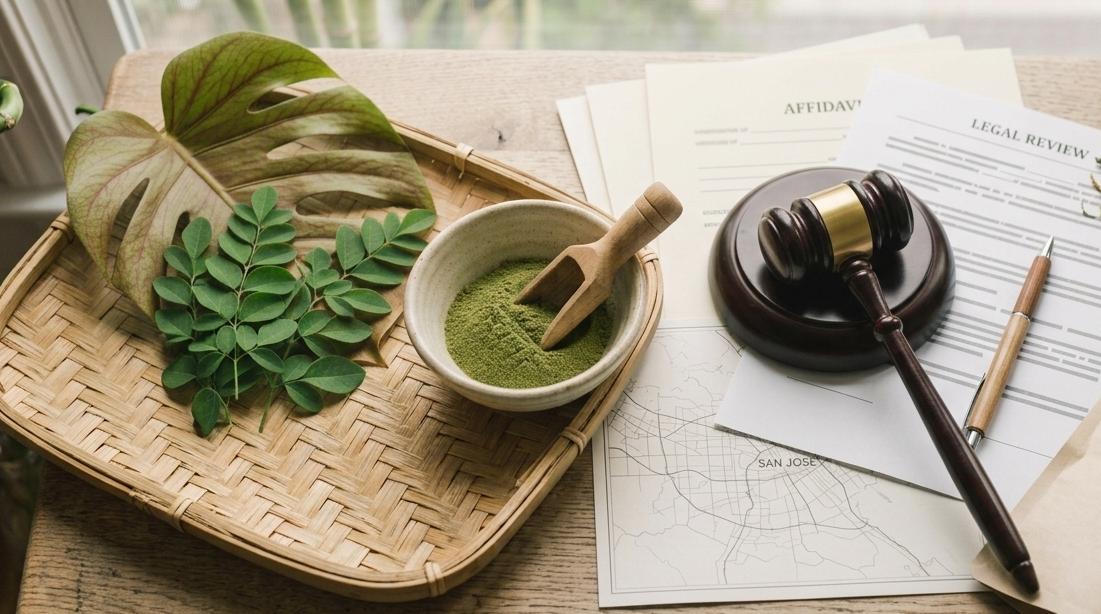
The ever-controversial Kratom, as well as its alkaloids, has brought along questions of legality both nationwide and locally in the United States. 7-hydroxymitragynine (7OH) is one of the potent alkaloids of kratom and is one of the most talked-about compounds over the years. You are not alone in your search for excellent information regarding the question of 7OH is legal in San Jose.
In this blog, we’ll cover the kratom legality within San Jose, the regulations surrounding 7OH, where, and how you can purchase 7OH in the place, and what you must bear in mind as a consumer.
Understanding 7OH and Kratom
Kratom ( Mitragyna speciosa) is a tropical tree that grows in Southeast Asia. Its leaves have dozens of alkaloids, but the most noteworthy ones are the mitragynine and 7-hydroxymitragynine (7OH).
Although its rationale is as a mood support agent, relief agent, energy-giver, 7OH is particularly interesting since it is a known binder to opioid receptors, i.e., it is among the elements that contribute to the powerful effects of kratom the most.
Pure 7OH products can occasionally be sold as purported enhanced kratom products, or by themselves (instead of kratom leaves); though it also naturally occurs, in minuscule amounts, in kratom leaves.
Kratom Legality in the United States
In America, kratom is in a legally gray status: not reserved under the Controlled Substances Act, yet not FDA-approved to be used in any manner, with importation being restricted.
That is, whether to ban, limit, or be unlimited about the use of kratom and its pieces is up to every state, and in many cases, every city or county.
Common Legal Categories:
- Legal: Possession and sale are allowed, sometimes with age restrictions.
- Banned: Neither kratom nor its alkaloids are allowed.
- Partially Restricted: Often involves age limits or local bans within an otherwise legal state.
Kratom Regulations in California
Kratom is legal in the whole of California, but there are two exceptional cities, the city of San Diego and the city of Oceanside, that have made official prohibitions on kratom.
What it implies is that the residents of San Jose, or any other city that is not under a local ban, are free to purchase, own, and consume kratom.
- No statewide ban exists in California.
- No state-level regulations restrict the sale of kratom products, though there have been legislative discussions about imposing standards such as labeling or age restrictions.
- San Diego and Oceanside are currently the only California cities with local bans.
Kratom is not regulated (as of 2025) by the California Department of Public Health, so product quality and claims are ungoverned at the state level.
Is Kratom Legal in San Jose?
Kratom is legal in San Jose, San Jose and Santa Clara County; in general, it’s not prohibited the sell, possess, and use kratom and products that contain its alkaloids. Neither the city of San Jose nor any county within the area enacts ordinances prohibiting kratom and its distribution. Various sources that retail and advocate for kratom confirm this.
You can find kratom products in local smoke shops and specialized herbal stores throughout the San Jose area. Common kratom product forms include:
- Powders
- Capsules
- Liquid extracts
- Enhanced kratom preparations
Practical Takeaway: In San Jose, kratom is legal for adult use and sale, with no formal age restrictions (though most vendors require buyers to be at least 18).
Is 7OH Legal in San Jose?
7OH, as a natural alkaloid of kratom, is not separately scheduled or banned within San Jose. Since there is no local ordinance covering kratom or its specific alkaloids, 7OH falls within the same legal status as kratom itself. This means:
- The products containing 7OH, be it a part of a leaf, extract, resin, or concentrate, are legal to possess and buy in San Jose, as long as it is sold as a kratom supplement and not purified 7OH, specifically.
- Pure extracts of 7OH can be more difficult to find as well, as the majority of local retail stores are benchmarked to federal and state laws regarding supplement labeling and marketing.
Federal and State Regulatory Context
FDA does not authorize the marketing of kratom or its alkaloids as dietary supplements; however, the presence or personal use of kratom (or 7OH) is not against the federal or California state law. Enforcement aims at product claims as well as interstate shipments, rather than user possession.
Local Enforcement
San Jose Police and the rest of the local police are not actively banning the sale or possession of kratom or 7OH. San Diego, on the other hand, has a city ban on kratom and any other new psychoactive substances, which does not exist in San Jose.
Buying 7OH in San Jose
Where Can You Buy Kratom and 7OH Products?
In San Jose, kratom products are available in a wide range through retailers. These are mainly the full-plant powder and capsules, although also extracts, resins, and what are called the enhanced products containing a higher amount of 7OH matter.
Can You Find Pure 7OH Extracts?
Local smoke shops carry what is referred to as standard preparations and 7OH-enriched extracts as part of the natural alkaloids in kratom plants.
Relative to brick-and-mortar stores in San Jose, the pure 7OHs that can be chewable 7OH tablets, or laboratory-produced 7OH, are less prevalent in the nationwide pattern of wary attitudes toward the marketing of high-concentration alkaloid extracts.
The most popular online shops have well-known brands; they tend to provide a robust report on lab tests and potency distribution. Nevertheless, check the transparency and authenticity of a vendor every time you wish to make a purchase.
Kratom Legality and Regulation: What Should You Know?
Why Has Kratom Avoided a Ban in San Jose?
Low Incidence of Harm: To date, San Jose has not seen the public health crises that led to kratom bans in other municipalities.
- Advocacy Influence: Pro-kratom groups and scientific assessments (including WHO recommendations) have encouraged policymakers to approach kratom with caution rather than outright prohibition.
- Legal Precedent: California’s tradition of botanical tolerance and the absence of substantial local controversy mean San Jose has no active push toward banning kratom or its alkaloids.
- Continued Monitoring: Lawmakers regularly review supplemental products and may seek to regulate labeling, consumer safety, and age restrictions in the future.
What About the Future?
A new classification of the legal status of kratom and 7OH may appear, such as local laws or state regulatory initiatives, such as the proposed Kratom Consumer Protection Act (KCPA), that would establish requirements regarding manufacturing, labeling, age, and safety, with no ban on kratom. It is required that users and retailers do not stop checking updates.
Key Benefits and Consumer Guidance
Benefits of Legal Kratom and 7OH in San Jose
- Access to Choice: Consumers can try various kratom strains and products, enabling nuanced personal wellness experimentation.
- Safety and Transparency: Wider acceptance means users can seek lab-tested kratom from reputable vendors, reducing the risks associated with unregulated black-market products.
- Local Shopping Support: San Jose’s legal status encourages knowledgeable retailer staff, who can guide consumers on strain selection and responsible use.
Cautions for Buying 7OH/Kratom Products
- Regulatory Gaps: Without formal regulation, purity and potency can vary. Buy only from stores that provide lab test results and clear labeling.
- Potential for Change: While kratom is currently legal in San Jose, laws and ordinances can evolve. Stay informed by checking city and state legislative updates.
- Product Differences: Be wary of vendors selling “pure 7OH” marketed as a separate supplement—in many areas, this is a gray zone, as FDA rules may apply.
Final Thoughts
San Jose can be noted among the major cities in the U.S, and yet, kratom and 7OH are not regulated, indicating that they are freely accessible and acceptable.
Adults are allowed by law to buy and consume goods enriched with 7-hydroxymitragynine, either within pure kratom or in refined forms. Nevertheless, as a buyer, it is necessary to be careful, purchase laboratory-tested products, and be aware of the changing local and state policies.


Leave a Reply